Juno vs. Filed
Two different approaches to tax preparation
The difference between Filed and Juno comes down to when work gets handed off and how involved you stay. Filed works best for firms that batch work after all documents are in. Juno was built by a CPA for continuous prep and review, with predictable pricing and the flexibility to adjust as new documents show up.
Built for different working styles
Filed workflows and pricing are structured around the assumption that documents arrive all at once before prep begins. Juno is designed for a world where clients send documents sporadically, remember things late, and add context as conversations unfold. The workflow supports steady progress as information comes in, without disrupting the work already underway.
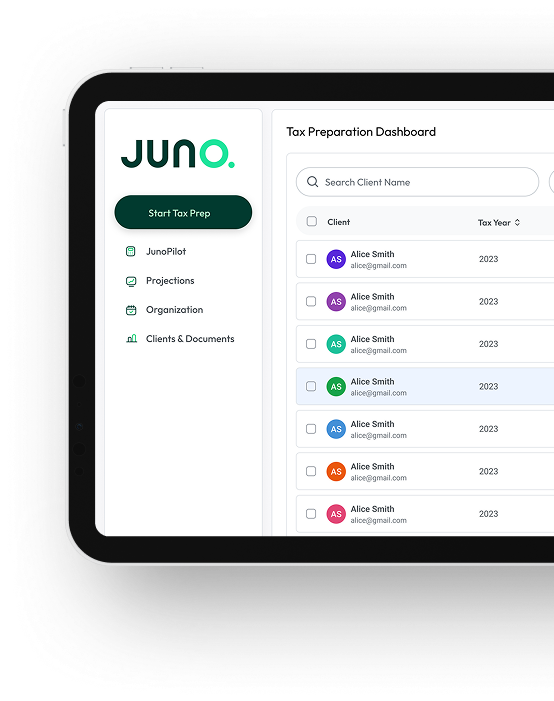

Real-time work vs processing-based preparation
One difference firms often notice is how work moves during busy season. With Filed, preparation is processing-based: information is submitted, preparation runs separately, and there is a period of time before an updated return is delivered once that run is complete. With Juno, preparation happens in real time alongside your team, so when a missing 1099 arrives or a question is resolved during review, the update can be incorporated as part of the ongoing work rather than after a separate preparation run.

Handling late or corrected documents
It is common to receive corrected K-1s or additional documents after a return has already been started. Filed’s model requires preparation to be rerun when that happens, which means a new preparation run and an additional charge. Juno supports continuous updates, allowing new documents to be added as they arrive without restarting preparation or changing pricing.

Visibility during preparation
Filed is designed to deliver a completed return after preparation is finished. Juno keeps preparation visible throughout the process, showing how source documents such as W-2s, 1099s, and Schedule C items map into the return. This allows firms to review and make judgment calls before the return reaches final review

Complexity-based pricing vs set pricing
Filed uses complexity-based pricing, where costs depend on the complexity of the return and the number of preparation runs. This can make final costs harder to predict when returns evolve. Juno uses set pricing per return, so additional documents or mid-stream updates do not affect the price.

Assumptions about how work unfolds
Filed assumes preparation starts once documents are complete. Juno is built around the assumption that returns often change as questions are answered and documents arrive over time. By keeping you in the loop throughout prep, Juno supports review and judgment as part of the ongoing process rather than only at the end.

Switching workflows
Some firms are cautious about changing preparation workflows. Juno is designed to work with your existing process and alongside your tax software, allowing firms to adopt it without replacing the systems they already use. This makes it possible to incorporate Juno without rebuilding an entire process.
How firms describe the difference
In their own words, from teams that looked at both Juno and Filed
“With Filed, when you have to re-export, it charges you another return. If a client keeps forgetting things, you end up running two, three, four returns for the same person.”

“The processing time in Juno I was astounded by. We looked at Filed first and it took hours for them to come back. The processing in Juno was something that really stood out to us.”

“When I ran the numbers with Filed, their pricing only works for maybe 50 of my clients, and even then it’s very expensive. It ended up around $50 a return for W-2s and 1099s, and then it went up from there.”

How does Juno compare to Filed?
| Capability | Juno | Filed |
|---|---|---|
| Preparation timing | Real-time preparation as you work | Preparation completed in processing runs |
| Visibility and judgment during prep | See and review how data is mapped at each step | Review occurs after preparation is finished |
| Field-level visibility (W-2s, 1099s, K-1s) | Line-by-line visibility during prep | Delivered after preparation |
| Pricing structure | Set price per return | Pricing tied to complexity and reruns |
| Updating a return when new documents arrive | Updates incorporated without restarting preparation | Preparation rerun required |
| Additional charges when prep is rerun | No | Yes |
Frequently Asked Questions
You don’t have to start over to switch
Get set up
Create an account in about a minute. Juno is built to fit alongside the tax software and processes you already use, not replace them.
Use it on real returns
Bring in an actual client file or question and work the way you normally would. Your binder, review habits, and workflow stay intact.
Get support from tax pros
Onboarding and ongoing help come from experienced tax professionals who understand busy season and how firms really work.
Simple, predictable pricing
Pricing is per return and stays straightforward, so you can move forward without disruption or surprises.
The bottom line
Juno is designed for firms that want preparation to happen continuously, with set pricing that doesn’t change as returns evolve. Instead of requiring all documents up front and pricing each preparation run based on complexity, Juno assumes information will change and supports updating returns without additional charges. The result is a workflow where prep, review, and judgment happen together, even when documents arrive late.